Iterative Hot Start File in SWMM5
Iterative Hot Start File in SWMM5
This is a useful technique for improving the accuracy and stability of SWMM 5 simulations, particularly when dealing with complex models or those with significant initial conditions. Here's a breakdown of why and how to use iterative hot start files:
What is a Hot Start File?
- A hot start file captures the hydraulic and hydrologic state of a SWMM model at a specific point in time. This includes things like water levels in nodes, flow rates in conduits, and soil moisture conditions in subcatchments.
- By using a hot start file, you can initialize a simulation with these pre-existing conditions instead of starting from "cold" (empty) conditions.
Why Use Iterative Hot Start Files?
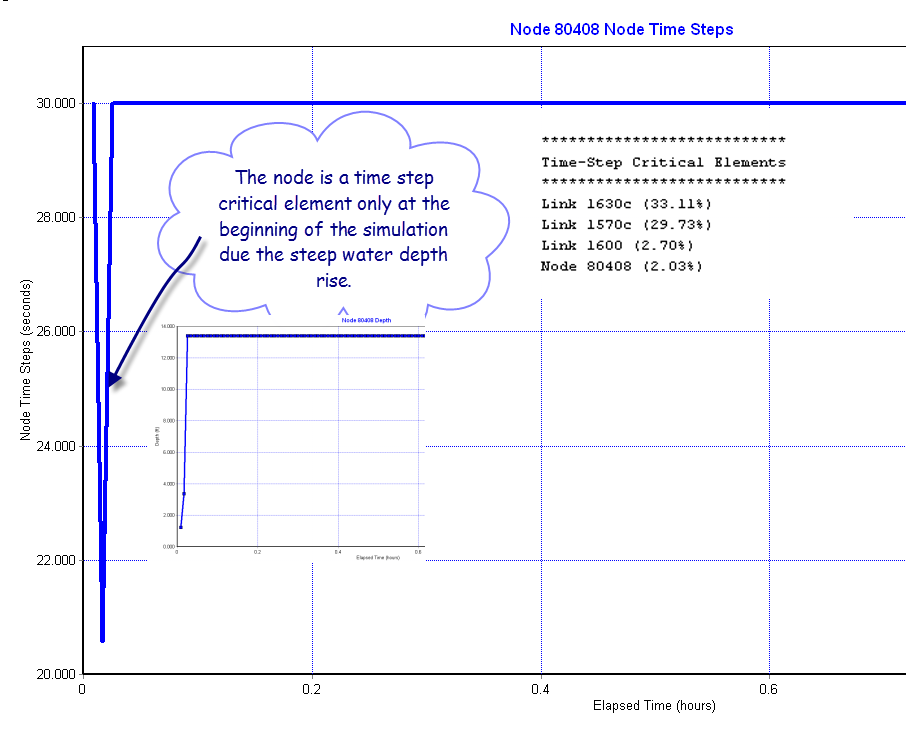
- Reduce Initial Transients: Starting a simulation from cold conditions can sometimes lead to numerical instabilities and inaccuracies, especially in dynamic wave routing. These initial transients can affect the results, particularly in the early part of the simulation.
- Improve Continuity: A good hot start file helps ensure better mass balance (continuity) in the model, meaning that the total volume of water in the system is conserved throughout the simulation.
- Faster Convergence: For long simulations or those with complex interactions, using a hot start file can help the model reach a stable solution more quickly.

The Iterative Process
The steps for a systematic way to generate a refined hot start file:
- Initial Run: Run the SWMM model with no hot start file.
- Save Hot Start File 1: Save the state of the model at the end of the simulation as "Hot Start File 1."
- Run with Hot Start File 1: Run the model again, this time using "Hot Start File 1" as the initial condition.
- Save Hot Start File 2: Save the state of the model at the end of this second run as "Hot Start File 2."
- Run with Hot Start File 2: Run the model again, using "Hot Start File 2."
- Repeat: Continue this process of saving and using hot start files, alternating between the two files, until the initial and final storage volumes in the flow routing continuity table are nearly identical.
.png)
Indicators of Convergence
- Flow Routing Continuity Table: Pay close attention to the "Initial Stored Volume" and "Final Stored Volume" reported in this table. When these values are very close, it indicates good mass balance and that the model has reached a stable state.
- Other Model Variables: You can also monitor other key variables, such as water levels at critical nodes or flow rates in important conduits, to ensure they stabilize over successive iterations.
Benefits
- Increased Confidence: Using an iteratively generated hot start file increases confidence in the model's accuracy and stability.
- Reduced Errors: It minimizes the impact of initial transients and improves mass balance.
- Efficient Simulations: It can lead to faster and more efficient simulations, especially for long-term or complex models.
By following this iterative process, you can create a high-quality hot start file that improves the overall performance and reliability of your SWMM simulations.