Friday, December 27, 2024

Link and Node Basics in SWMM 5

Link and Node Basics in SWMM 5

Fundamental components of any SWMM 5 model: links and nodes. These elements are essential for representing the physical infrastructure of a drainage system and simulating how water flows through it.

Nodes

  • What they are: Nodes are points within the drainage network where water flows converge or diverge. Think of them as junctions, manholes, or points of interest within the system.
  • Types of nodes:
    • Junctions: The most common type, representing points where pipes connect.
    • Outfalls: Points where water exits the system, such as discharge into a river, lake, or treatment plant.
    • Storage Units: Represent detention ponds, reservoirs, or other storage facilities.
    • Dividers: Nodes that split incoming flow into two or more outgoing pipes based on specified rules.

Links

  • What they are: Links are the conduits that convey water between nodes. They represent the pipes, channels, or other conveyances in the drainage system.
  • Types of links:
    • Conduits: The most common type, representing pipes or channels with various shapes, sizes, and materials.
    • Pumps: Used to lift water from lower to higher elevations.
    • Orifices: Represent small openings that control flow, such as those found in weirs or underdrain systems.
    • Weirs: Used to model overflow structures or flow control devices.

Key Concepts

  • Connectivity: Nodes and links are interconnected to form the drainage network. Water flows from upstream nodes, through links, and into downstream nodes.
  • Elevation: The elevation of nodes and the invert elevation of links are crucial for determining flow direction and hydraulic grade lines.
  • Hydraulic Properties: Links have hydraulic properties like diameter, roughness (Manning's n), and length, which influence flow calculations.
  • Flow Routing: SWMM 5 uses various methods to route flow through links and nodes, including steady-state, kinematic wave, and dynamic wave routing.

Why They Matter

  • Network Representation: Nodes and links are the building blocks for representing the physical layout and characteristics of the drainage system in SWMM 5.
  • Flow Simulation: They are essential for simulating the movement of water through the system, including flow rates, water depths, and velocities.
  • System Analysis: By analyzing the behavior of links and nodes, you can identify potential bottlenecks, surcharge risks, and areas for improvement in the drainage system.

Example

Imagine a simple system with a subcatchment draining into a pipe that leads to a manhole. In SWMM 5:

  • The subcatchment would be connected to a junction node.
  • The pipe would be represented as a Conduit link.
  • The manhole would be another junction node.
  • If the manhole discharges to a river, the river would be represented by an outfall node.

By understanding the basics of links and nodes in SWMM 5, you can effectively build, analyze, and interpret models for stormwater management, flood prediction, and drainage system design.
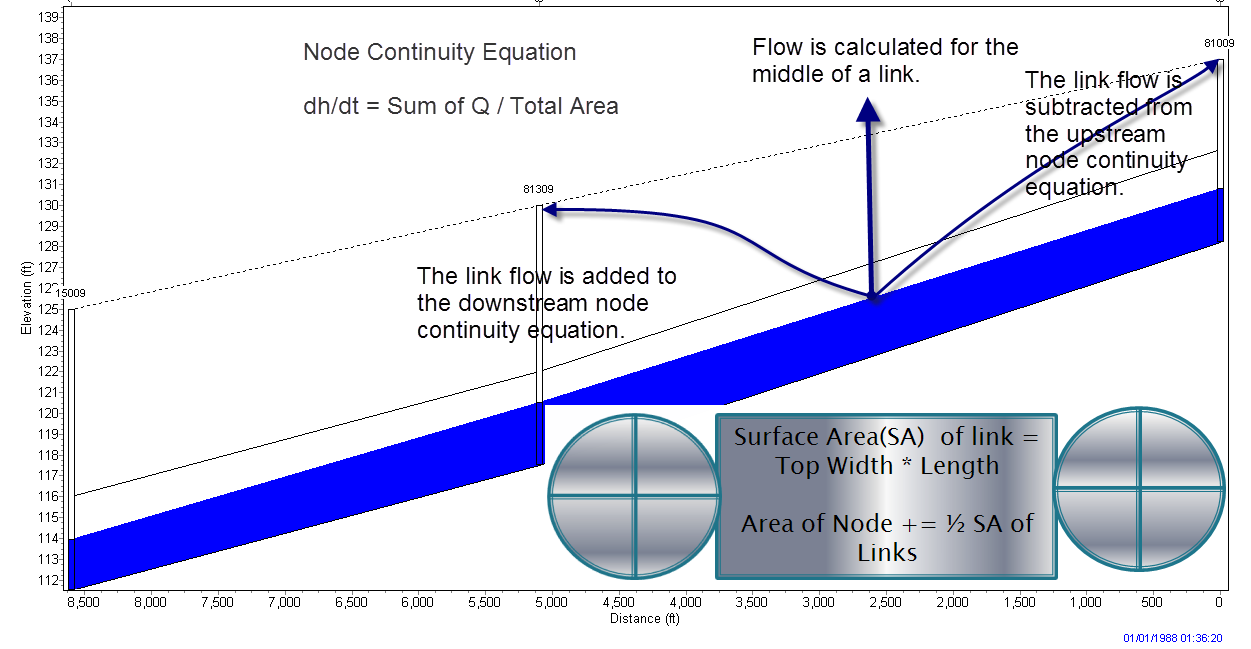
 

Figure 1. Link and Node Basics in SWMM 5

What is Hours Above Full Normal Flow in SWMM 5?


What is Hours Above Full Normal Flow in SWMM 5?

Let's break down what "Hours Above Full Normal Flow" means and why it matters.

Normal Full Flow

  • Manning's Equation: In SWMM 5, the normal full flow of a conduit (pipe or channel) is calculated using Manning's equation. This equation considers the conduit's geometry (shape, size, slope) and roughness to determine the flow rate when the conduit is flowing completely full under gravity conditions.1
  • Reference Capacity: This normal full flow serves as a reference point or baseline capacity for the conduit.

Exceeding Normal Full Flow

  • Head Difference: The flow in a conduit can exceed its normal full flow if there's a sufficient head difference across the conduit. The head difference is the difference in water surface elevation between the upstream and downstream ends of the conduit. A larger head difference creates a greater driving force for flow.
  • Surcharge: When the flow exceeds the normal full flow, the conduit may become surcharged. This means the water level rises above the crown of the conduit, and the conduit is under pressure.

Hours Above Full Normal Flow

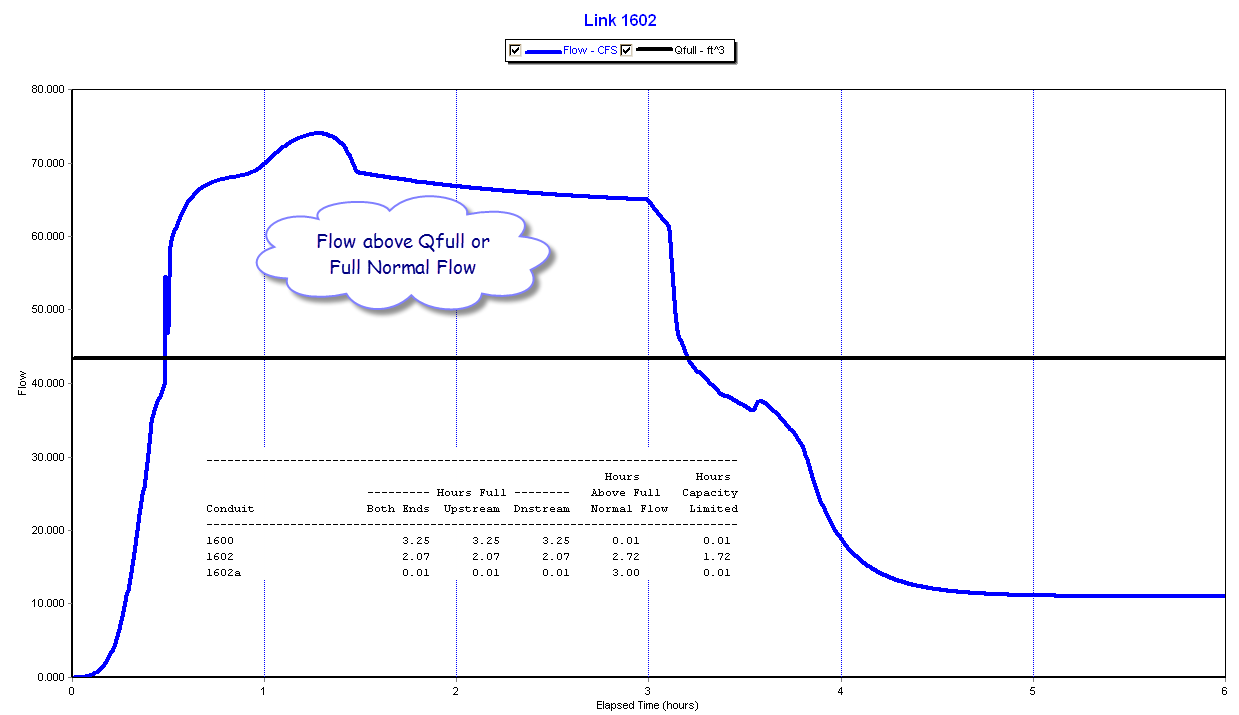
  • SWMM 5 Reporting: In the SWMM 5 output, the "Hours Above Full Normal Flow" statistic in the Conduit Surcharge Summary Table tells you the total number of hours during the simulation that a particular conduit experienced flow rates exceeding its normal full flow capacity.
  • Significance: This is a valuable indicator of potential surcharge conditions and high flow stresses in the system. It helps identify conduits that might be undersized or experiencing backwater effects.

Why It Matters

  • Identifying Bottlenecks: Consistently high values for "Hours Above Full Normal Flow" can pinpoint bottlenecks in the drainage system where capacity is insufficient.
  • Assessing Surcharge Risk: It highlights areas at risk of surcharging, which can lead to flooding, manhole overflows, and other problems.
  • Design and Rehabilitation: This information is crucial for designing new drainage systems or rehabilitating existing ones. Engineers can use it to size conduits appropriately or implement flow control measures to mitigate surcharge risks.
  • Model Calibration and Validation: Comparing observed surcharge conditions in the real system with the "Hours Above Full Normal Flow" in the model can help with calibration and validation efforts.

Key Takeaways

"Hours Above Full Normal Flow" is a critical metric in SWMM 5 for understanding how the model handles flow conditions that exceed the normal capacity of conduits. By tracking this statistic, you gain insights into potential surcharge problems, system bottlenecks, and areas that may require design modifications or further investigation.

Figure 1. Hours above Normal Flow in SWMM 5 Links


Figure 2. Flow versus Full Flow in SWMM 5

InfoSWMM: A 2030 AI-Assisted Study Guide

  InfoSWMM: A 2030 AI-Assisted Study Guide delete   InfoSWMM: A 2030 AI-Assisted Study Guide A comprehensive study guide for someone in 2030...